

Last week, we shared stories from recent hires about what their job searches actually looked like. Many searches took far longer than expected. Some lasted five months. Others lasted more than a year.
Fast Company reported in early 2025 that the average job search takes about six months, and the share of people searching six months or longer had grown by more than 50%. Among our own respondents, searches ran even longer: an average of ten months, with a median of eight.
Many job seekers assume that if they haven't landed something within a few weeks or months, they're somehow behind. The reality is that job searches often involve lots of waiting: waiting to hear back; waiting between interview rounds; waiting for orgs to make decisions; waiting for the right opportunity to appear.
So this week's Get Hired is all about the question: So, what should I do with that time? Here are four areas worth focusing on.
1. Follow Up (But Don't Overdo It)
One of the most common questions we hear is, "Should I follow up?"
Usually, yes. If you've had an interview and haven't heard back by the timeline provided, a brief follow-up email is appropriate. Something simple works:
"I wanted to check in regarding the timeline for the role and see if there are any updates you're able to share. I'm still very interested in the opportunity and appreciate your time."
After applying to a job, however, follow-ups are generally less effective. Instead of spending hours tracking down hiring managers, your energy is often better spent networking, applying to other opportunities, or preparing for upcoming interviews.
2. Keep Your Network Alive
One exercise I often recommend is creating a list of organizations you'd genuinely love to work for.
Then ask yourself:
Who do I know there?
Who knows someone there?
Who can help me learn more about the org?
You don't need to ask for a job. Start by asking for information, perspective, and connection. Even if those conversations don't lead directly to opportunities, they help you stay informed, visible, and connected to the field.
The candidates we featured last week repeatedly cited networking as one of the most valuable parts of their search.
And a quick reminder that networking isn't just about the 1:1 meeting, but also following up and building relationships. Here are some more of my recent networking tips and the NRG Networking Toolkit.
3. Strengthen Your Story and Materials
The time between interviews is an opportunity to sharpen your narrative, resume, etc.
Can you clearly answer:
Why do you do this work?
What's your superpower?
What are you looking for next?
If you missed it, we dove deeper on these questions in our recent newsletter on personal stories.
Interview preparation is wicked important, too. My best tip is to prepare examples for every major qualification listed in the job description. When interview invitations arrive, you'll feel much more confident if you've already thought through your stories and examples.
4. Close the Gap
If there is a skill you've been wanting to strengthen, now may be the perfect time. That doesn't necessarily mean enrolling in a formal degree program.
It could mean:
Taking on a consulting project
Volunteering with an org you care about
Serving on a board or committee
Completing a certification
Learning a new software platform
Practicing grant writing
Canvassing or doing phone calls for a local electoral candidate
Managing a small project outside your day job
Reading a book on the topic
This job search period can be a great time to develop skills that make you a stronger applicant for future opportunities. Even small experiences can help you tell a more compelling story in interviews.
The bottom line: waiting is often the hardest part of a job search. But waiting doesn't have to mean standing still.
While you can't control when an org responds or when the right opportunity opens up, you can control how you use the time between now and then.
Invest in relationships. Strengthen your story. Build your skills.
One quick note: we know it's unusual to hear from us two weeks in a row. We wanted to share this follow-up while last week's job search timeline survey was still fresh. Starting after this edition, we'll be back to our regular biweekly Get Hired schedule.
Happy job searching!

Executive Director @ Ready, Willing & Able Philadelphia | Philly | $130K-$150K
Executive Director @ Clean & Healthy California | Sacramento | $220K-$250K
Capital Campaign Director @ Critical Resistance | Remote in CA, Preference for Bay Area | $120K-$140K
Media Director @ Working America | DC | $155K+
Director of Strategy & Special Projects @ Freedom Forum | Remote | $125K-$131K
Chief Financial Officer @ Bend The Arc | Remote | $155K-$165K
Managing Director, International Engagement @ America Is All In | Remote | $175K-$209K
Regional Philanthropic Director, West @ Movement Voter Project | San Francisco Bay Area | $140K-$170K
That’s not all! We’re hiring for additional jobs and you can see all of them on the NRG website.
Post Your Jobs With Us

Are you (or orgs you know) hiring this summer?
Our next Get Hired Newsletter on June 24th will highlight open roles across the mission-driven space. We'd love to highlight your openings in the blast. This is a free posting.
Submit jobs by Tuesday, 6/23
Ask The Coach: Executive Edition
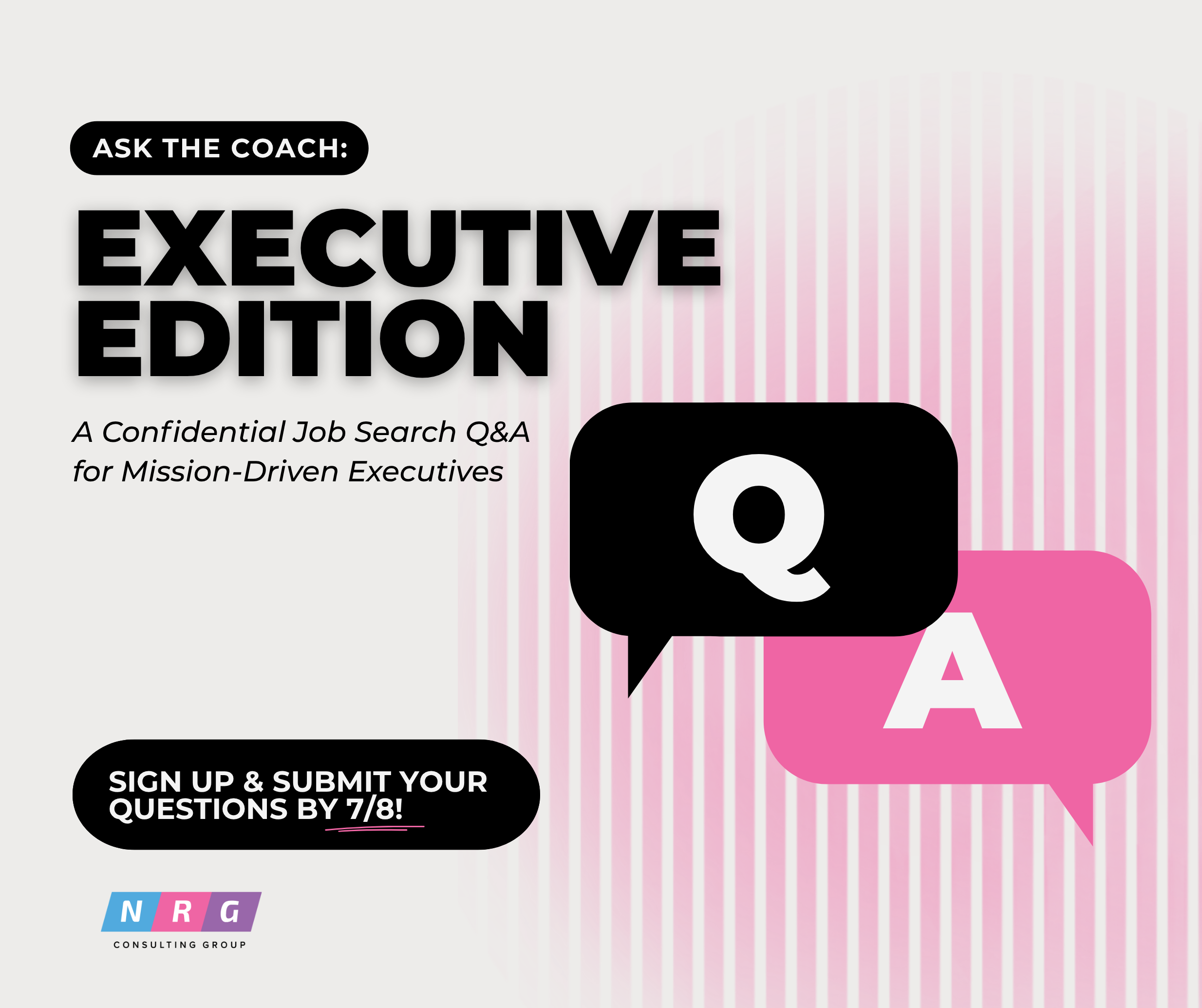
Executive job searches often happen behind the scenes. If you're exploring a leadership transition, submit your questions for our special Ask The Coach: Executive Edition.
Kristin Saybe and I will tackle executive hiring, networking, compensation, board dynamics, and more in a private recording shared with registrants on July 14.
Questions due July 8.
📢 Follow NRG on LinkedIn to stay up to date on the roles we’re hiring for. If you find this newsletter helpful, forward it to your friends and help us build our network! If you received this from a friend, sign up here to receive future “Get Hired'' newsletters.
Let’s move,
Naomi
P.S. If you’d like a partner to help you with your job search strategy, learn how NRG’s coaching programs can help you.