
Got A "No"? Read This First
If you've been searching for a while, you've almost certainly received one: the "After careful consideration" rejection email. Here's something we don't talk about enough, though. When a recruiter sends that note, they notice what comes back. And the reply you send after a "no" can do a lot for your search because it's one part of the process that's still entirely in your hands.
We recently wrapped up a search, making an offer to one finalist, and sending our regrets to the other top candidates. Most replies looked about how you'd expect. But one stood out so much that we're still thinking about it.
So this week's Get Hired is all about what to do when the answer is no: how to respond in a way that keeps the door open, and why that one reply matters more than you'd think.

The reply we still think about
When we shared the news, most replies sorted themselves into the typical categories. A few were polite but final. A few went straight to wanting feedback — understandable, though the honest truth is most lawyers recommend we don’t share feedback. So, we’re not always able to respond with the feedback candidates are looking for. There's nothing wrong with either one of these responses, they just don't do as much for you as they could.
Then there was one we're still thinking about.
The note was simple. It said, more or less: thank you for letting me know, I'm grateful I got the chance to tell my story and think through everything I've accomplished. That time was worth it.
No hard feelings, no push-back. Just warmth and a little perspective. And it landed, because it told us this was someone who understood something a lot of people miss in the moment.
What they understood
A no sometimes can feel like a conclusion to your worth. This is far from the truth. It usually comes down to fit, timing, or one other person who happened to line up a little differently, none of which erases the work you did to get there. This candidate saw the interview for what it really was: a chance to get sharper at telling their own story, which is something they get to keep no matter who got the job.
That's the work we dug into a few weeks back in our 3 Questions That Make Your Story Strongerarticle. When your story is clear and grounded, even a search that ends in a “no” leaves you better prepared for the next conversation, and it makes the people you meet along the way want to root for you.
What about an earlier no?
Not every rejection comes at the finish line. If you hear back after a resume screen, try not to read too much into it. That early, it's rarely about you, and it's usually a nudge to keep aiming at the roles that genuinely fit.
And then there’s the post-interview rejections. Here, a short note saying you valued the conversation is more than enough. You don't need a strategy. You just get to be someone people were glad to have met. You can even request them on LinkedIn to build your network.

Before you hit send
You don't get to decide whether you get the offer. But you completely control how you leave. I started out as a canvasser, knocking on doors and raising money for the environment. One rule was to leave every door on a positive note, because maybe they’ll give next year, or online, even if they say no.
The same rules are at play here. Today's “no” is sometimes tomorrow's referral.
A warm, genuine reply costs nothing, and it keeps you on the radar of someone who already liked you enough to bring you in. If you haven't already, connect with the people you met on LinkedIn, and send a quick personal note with the request. That's how a one time conversation becomes a relationship, and how you stay top of mind the next time they're hiring.
You don't control the decision, but you can always control the way you walk out. And that's often the thing they remember. So the next time a no lands in your inbox, give yourself a minute, then answer like the person who left the door open.
Happy job searching!

Sr Program Officer, Community & Worker Power @ Freedom Together Foundation | Hybrid in NYC | $183K-$203K
Executive Director @ Clean & Health California | Sacramento | $220K-$250K
Media Director @ Working America | DC | $155K+
Executive Director @ Ready, Willing & Able Philadelphia | Philly | $130K-$150K
Capital Campaign Director @ Critical Resistance | Remote in CA, Preference for Bay Area | $120K-$140K
Director of Strategy & Special Projects @ Freedom Forum | Remote | $125K-$131K
Deputy Director of Programs & Campaigns @ California Domestic Workers Coalition | Bay Area or LA | $95K-$105K
VP of Finance & Administration @ Active Minds | DC Preferred, Remote Available | $130.2K-$151.9K
Senior Director, Chapters @ Active Minds | Remote (US) | $113.4K
That's not all! We're hiring for additional jobs and you can see all of them on the NRG website.
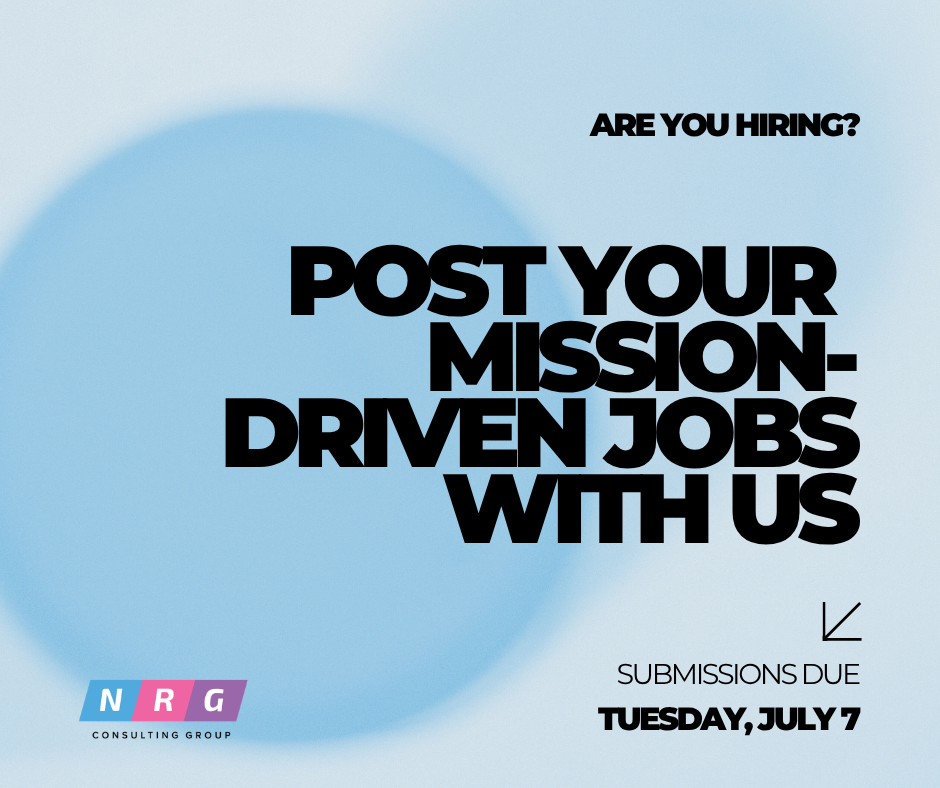
Post Your Jobs With Us
ATTN: Date pushed back!
Are you (or orgs you know) hiring this summer?
Our next Get Hired Newsletter on June 24th will highlight open roles across the mission-driven space. We'd love to highlight your openings in the blast. This is a free posting.
Submit jobs by Tues, 7/7:
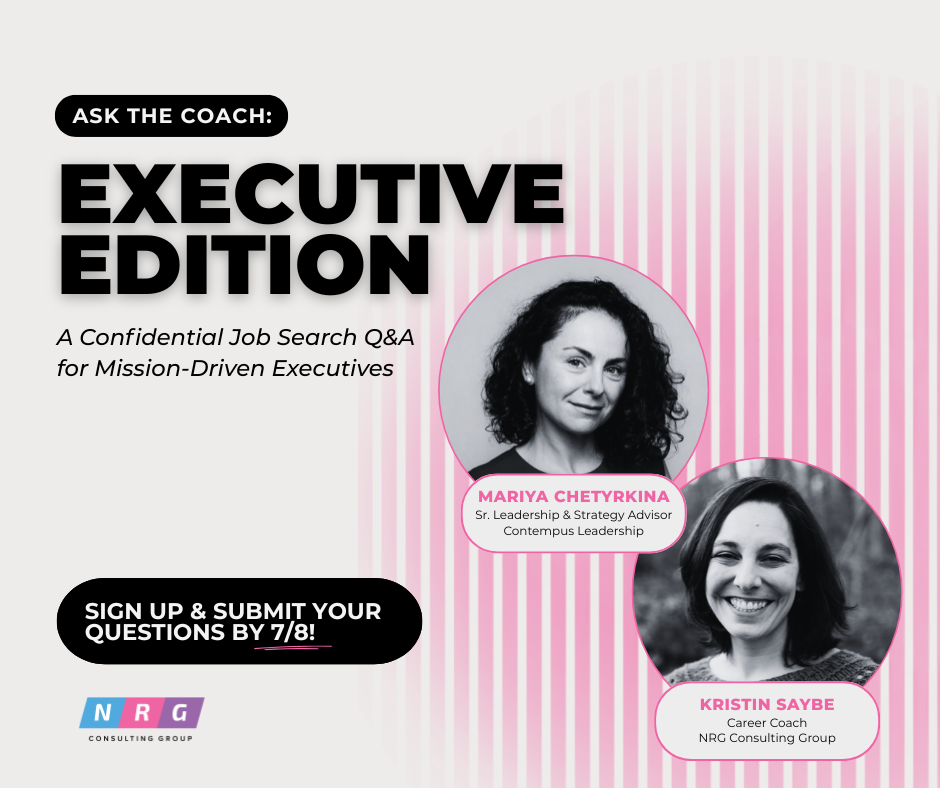
Ask The Coach: Executive Edition
Designed for mission-driven leaders navigating executive job searches, leadership transitions, and organizational change.
Submit your questions by July 8. NRG Career Coach, Kristin Saybe, and Contempus Leadership’s Sr. Leadership & Strategy Advisor, Mariya Chetyrkina, will record a private Q&A shared exclusively with registrants on July 14.
📢 Follow NRG on LinkedIn to stay up to date on the roles we’re hiring for. If you find this newsletter helpful, forward it to your friends and help us build our network! If you received this from a friend, sign up here to receive future “Get Hired'' newsletters.
Let’s move,
Naomi
P.S. If you’d like a partner to help you with your job search strategy, learn how NRG’s coaching programs can help you.